In 2023, the Brazilian documentary veteran, Eliza Capai, released her Incompatível com a Vida (Incompatible with Life). Despite being a mix of talking head with diary documentary, it is an utterly personal telling of her experience with the traumatic loss of her baby in her womb. The director tells her story, engages with other women with similar experiences, and advocates against the illegality of abortion in the country, which harms women going through the same trauma. The film won the É Tudo Verdade (It’s All True) festival that year and qualified for the Academy Awards, playing in multiple festivals throughout the year. Returning to the festival last year as a jury member, Capai told me about her upcoming documentary, which was being finalized, but would be much more uplifting and light. The director has now taken her newest work, A Fabulosa Máquina do Tempo (The Fabulous Time Machine), to the Berlinale Generation Kplus, a section dedicated to films about children
Capai’s new film takes place in Guaribas, Piauí, which, in the 1990s, had one of the lowest Human Development Indexes in the country. Throughout the policies of the first two Lula terms, from 2003 to 2010, the region received support from Bolsa Família, a public policy dedicated to financially supporting the families. It requires them to enroll children in schools, vaccinate them, and take them to medical appointments. The Guaribas’ HDI rose from 0.141, labeled as extremely low, to 0.508, a low number. Yet, for them, considerable growth. Capai follows the new generation of children born there, specifically a group of girls ranging from ten to twelve years old. Manuellinha, Sophia, and Manu are young girls who, alongside the director, imagine topics of the past, such as alcoholism, female prohibition of working by their husbands, and death in labor, for their future.
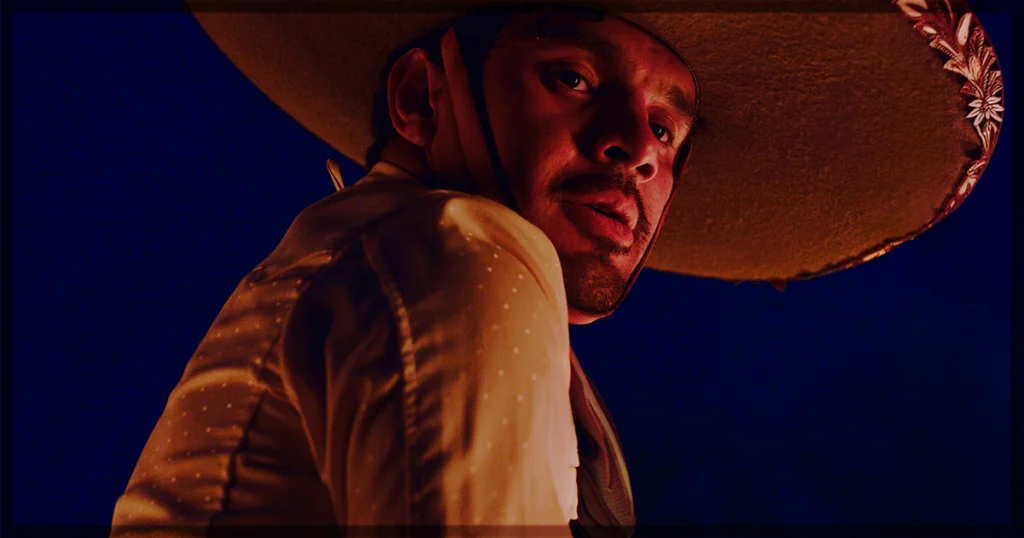
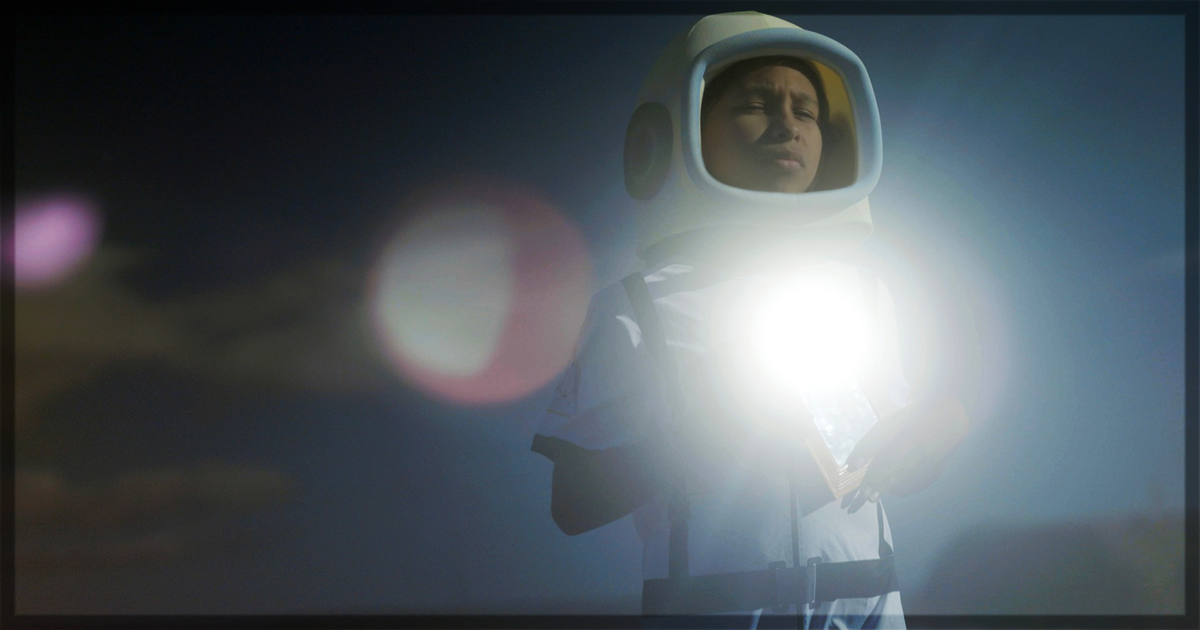
The director and those children imagine a Fabulous time machine, which is basically the power of their imagination captured by Capai’s cameras. Similar to Incompatível, the director combines documentary structures to document a different region and the children growing up there. In a sense, it is a docu-fiction, where the fictionalized scenes are the ones the children portray moments they mention, such as the death of a family member, the local drunkard killing a snake by biting it, and other events. At the same time, Capai wants to hear from them. Using the school venue, they sit in front of the blackboard, facing the camera, and answering the director about their religion, their fathers’ substance abuse, and the eagerness to have their first period. There is an inevitable connection between the adult here, the filmmaker, and the children; they speak the same language, understanding and respecting each other’s ideas.
In this sense, the film is an exercise of imagination. The so-called time machine is merely a philosophical device to intrigue the children to think about the past, what has changed, and what still needs to evolve. In one of those moments, the girl asks her mother why her brother can play outside all the time, and she cannot. Is it because of their gender differences? Despite the director not profoundly analyzing the misogyny still present in the deep Brazil, the region of the interior, distant from the capital, the film is a notable exercise of understanding how a new generation shifted their parents’ understanding of the world. A considerable element of this is the access to information through the internet, and TikTok becomes a central aspect of the discussion on how children listen unsupervised to songs that contain explicitly graphic lyrics.
The director shifts from an utterly personal and tough film in Incompatible with Life, which sparked conversations about abortion, to one where she still discusses politics. It is the confirmation of the importance of public policies that the Brazilian far-right considers as incentivizing poverty. In just two generations, that region raised its HDI four times, and 98% of children are in school, where they should be. Eliza Capai also stimulates the act of imagination through the film language by reenacting moments from that region and those children’s families, but instigating them to ask their mothers about feelings, history, and tough subjects. Fascinatingly, the casting of those girls is brilliant because they spread their charisma throughout the film, which gravitates towards their curiosity and funny aura, making this a joy to watch.
Thus, the return of Eliza Capai with A Fabulosa Máquina do Tempo is indeed lighter as she teased me when we met at the closing of the It’s All True Festival. Still, it follows the director’s footprint of combining documentary structures and discussing policies in a country that has proven they are the key to socially transforming the deep interiors.
A Fabulosa Máquina do Tempo recently premiered at the Berlin International Film Festival.
Learn more about the film at the Berlinale site for the title.
You might also like…