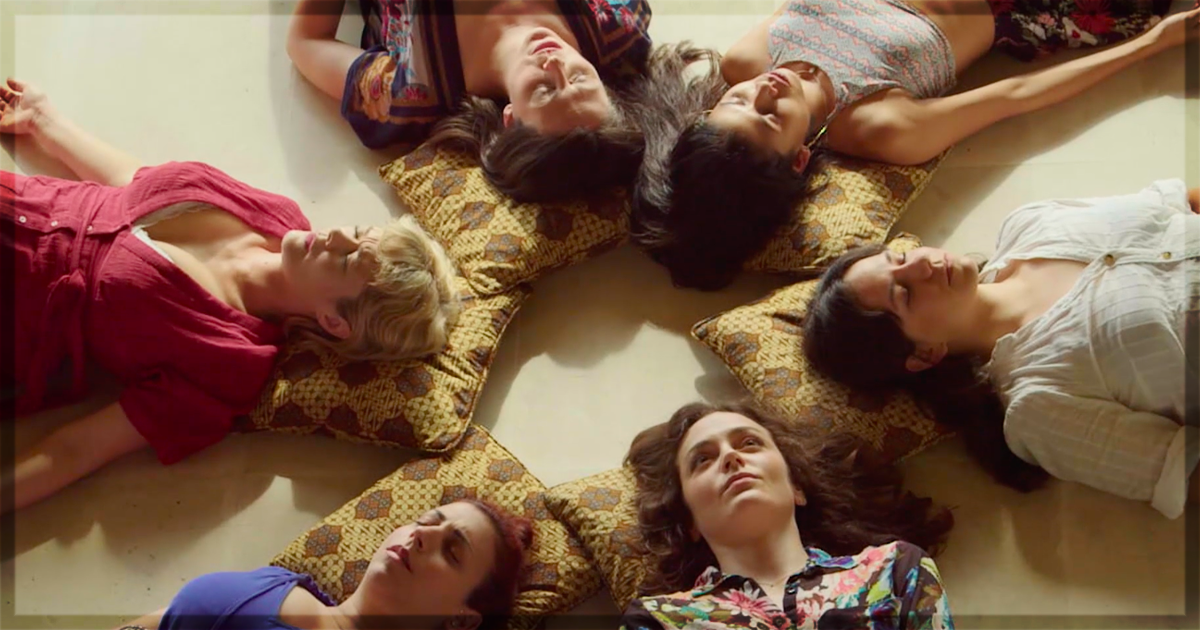
If the runaway success of The White Lotus is anything to go by, we as a society cannot get enough of (semi-)affluent white women on holiday. Bonus points if the women in question are trying to escape, find themselves, and / or reconnect with semi-estranged adult friends, and nothing quite goes as envisioned when they got on the plane. Unpacking, the new feature film by Alexandra Clayton & Michal Sinnott, understands this perfectly. First premiered at North Carolina’s Tryon International Film Festival in 2022 (predating all but the first season of The White Lotus, not to mention Hulu’s Nine Perfect Strangers) and winning awards at numerous US and international film festivals since then, Unpacking is now available to watch at home on Amazon Prime and Roku. Clocking in at a breezy 82 minutes, it is the perfect antidote to winter blues in both its picture of sunnier, warmer, beachfront climates and in its reminder that, sometimes, we cannot escape our own worst selves in paradise.
Wellness influencer Keri Hart (Sam Bianchini) runs her signature “soul reset” retreat in Bali, offering Western women the chance to reconnect with themselves away from the hustle and bustle of their daily lives, relationships, jobs, and families. Unpacking opens with several “audition tapes” of women sharing their lives with Keri virtually; she only has spaces for six of them on this exclusive experience promising transformation, self-knowledge, and connection – which she believes will drive out the isolation that is the root of so many common problems. A key step is removing toxic men from the daily equation and finding camaraderie with fellow women. This, of course, is destined to backfire, and Keri has some issues of her own (to put it mildly) that come to light once the six women land in Bali looking for enlightenment. When her assistant Ni Ketut (Dania Arancha) ends up leaving the group due to these conflicts, secrets, and desperate imposter syndrome, the women on the retreat realise they might be getting far more than they bargained for.
Eithne (Stephanie Ann Whited) is the one reluctant participant on the group trip, feeling somewhat tricked into taking the spot of a friend who dropped out, and this prickly, sceptical energy (and continually correcting the others on the pronunciation of her name) makes her a fun vehicle for audience identification. But the whole cast of characters and actors is wonderfully matched, which is a testament to the film’s creative approach. In their director’s statement on Unpacking’s website, Clayton and Sinnott explain that, at the outset of this process and “frustrated by the constraints of narrative feature making inside traditional industry channels”, they emailed several colleagues to suggest a “pay-your-own-way, filmmaking adventure in Bali.” This resulted in the creation of “The Collective”, where filmmaking was “quick, furious, collaborative, and virtually no-budget” within this team of sixteen people who shared ownership of the company and its product. The Collective has even agreed to donate a portion of the film’s future profits to beach conservation in Bali, where they shot on location.
While elements of this film shoot could mirror Keri’s undeliverable promise, Unpacking is a much greater success, largely rooted in the truths of The Collective’s members. Whited, Clayton, Sinnott, and the rest of their cast created their own characters “close-to-the-bone truths, ensuring room for vulnerable improv within the treatment for our run-and-gun shoot”. These are bold words that saw brilliant results, and Unpacking, in the eyes of this critic, certainly hits their goal of “a film that felt both authentic and fresh”. The proper ensemble process is felt throughout, with every character getting memorable moments to shine and a journey of self-discovery – even if they do not love what they find – as they face conflicts within themselves and the group.
The performances are the standout quality of Unpacking. The script is weaker, veering towards the obvious (though this might be a side effect of a largely improvised-stroke-devised creative process), and the direction is workmanlike. However, one of its best scenes captures a heated argument by whipping the camera back and forth between two of the women as they speak rather than cutting in the typical shot-reverse-shot format. The dizzying effect places the viewer right in the middle of this slightly stressful, slightly silly situation, making the chaos palpable. The sound design by Jason Binnick combines pop songs with vocal elements that would not sound out of place on a flagship HBO anthology show – coincidence, homage, or send-up, it works excellently.
The situations portrayed feel familiar to what many thirty-something white women have seen on their social media. One of the women loudly objects to a ritual performed by a white workshop leader that borrows indigenous healing traditions, and the line between exploration and sharing and overt cultural appropriation is a thin one. As she rails about ‘fucking colonialists’ and her duty as a white person to stand up to it when she sees it, the sentiments are hard to fault, even if the self-serving execution in the moment leaves more to be desired. By lovingly poking fun at both those who sell exotic wellness and those who object to it, Unpacking is ideally self-aware about everything from social media influencing to crystals and always has space to laugh with, rather than at, the cringiest moments.
Unpacking is a breezy dramedy fitting perfectly into the entertainment zeitgeist and showcasing an ultra-microbudget way of filmmaking. Those looking for a fix before The White Lotus returns will not find better entertainment.
Unpacking is now available to purchase at digital retailers.
Learn more about Unpacking at the movie’s official website.
You might also like…