
Ever since the organization of humanity in societies or colonies, female sexuality has been exploited. Hence, either through prostitution or paid pregnancies, there is a trade for the reproductive capacities of women. In a modern context, despite the prohibition in plenty of countries, surrogacy is a commercial practice that generates tons of money for intermediary agencies, which link parents to the surrogates. Although there is a demand for reproduction, surrogacy exploits women in social inequality. Similar to the trade logic, in which financial elites profit from the third world, the same holds for pregnancy services. Parents from countries like the United Kingdom or the United States, with economic order, contract women from Eastern Europe or other regions to carry their children. In the 9-Month Contract, the Georgian director Ketevan Vashagashvilli films a subject, Zhana, for eleven years, creating a strong bond with her. They first met while filming Vashagashvili’s short film, when Zhana was living on the streets with her daughter, Elene. Soon after, the woman managed to secure a roof, but financial insecurity continued.
In Vashagashvili’s debut feature, she follows her subject throughout the experience of generating income as a surrogate mother. At first, we understand this eleven-year period in four minutes, as the director voices over their relationship. The director creates a sisterhood with her subject, sympathizing with the hardships she faces in raising her daughter. Then, despite their proximity, there is no direct on-screen interaction between them to demonstrate affection. It appears only in the final fifteen minutes of the film, when Zhana encounters a life-threatening situation caused by the gig she took on to confront the financial hardships. In that moment, she asks the director to come closer, jokingly calling her “Doctor Ketevan”. At that moment, it is understandable how profound their connection is. In Kirsten Johnson’s An Incomplete List of What the Cameraperson Enables, the filmmaker states that the relationship between the subject and the cameraperson (the director) allows a complete emotional connection between them. In Zhana’s moment of life danger, she sees in Vashagashvili a helping hand.
The film is a raw portrait of a mother trying to raise her child in an underdeveloped part of Europe. The filmmaker does not analyze social inequalities in Georgia; however, there is an underlying layer of commentary on the lack of opportunities for uneducated individuals in the country. The subject affirms how she had to stop her education, and it became a secondary priority in her life. Still, the director features plenty of footage where the mother demonstrates a deep interest in Elene’s education. She worries about her daughter having a fulfilling education and allowing her to pursue the career she wishes to. In this sense, the film depicts economic desperation in the first part, denouncing the exploitation of women from underdeveloped parts of Europe by agencies from developed countries that underpay and mistreat them.
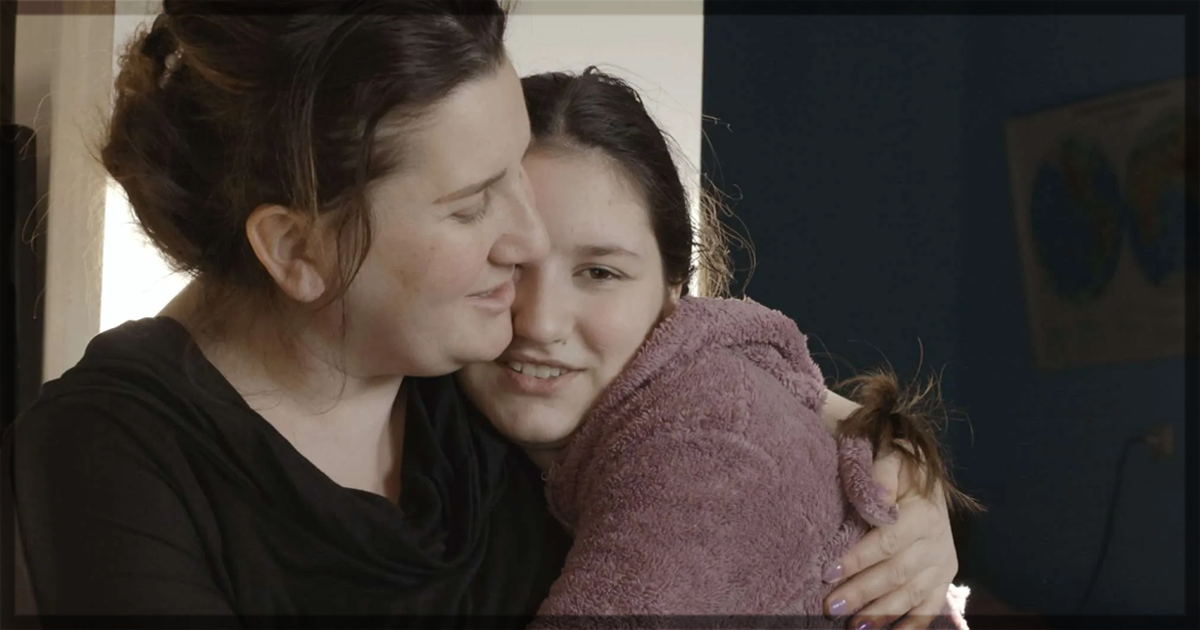
However, the film in the end is a love letter to the mother’s dedication to her child. When the ending credits roll, the director dedicates it to her mother. Similarly, she captures Zhana’s eleven years of devotion to Elene. In the arguably most emotional sequence, they meet for the first time after the emergency C-section. Her daughter is crying while the mother explains what went through her head in those moments, when she thought she would perish. Elene denies the money, particularly because it symbolizes the almost-death of her sole parent. Yet, Zhana affirms how incomplete life would feel if she died and could not give a last kiss to her child. These interactions demonstrate the beautiful love of a mother to her child, who puts her body in danger to provide a financially viable life for her child. Despite the lack of substance, the film has moments that discuss motherly love and surrogacy, but it delivers more slice-of-life moments. Visually, the director adopts a cinema verité approach, using digital devices to shoot countless hours of footage of Zhana and Elene.
In a sense, surrogacy is just another result of the late capitalism stage, when reproduction is a service, and the exploitation happens from the financial center to the underdeveloped individual. Ketevan Vashagashvilli approaches that in a 9-Month Contract, her debut feature about a subject she followed for eleven years. Consequently, it demonstrates its flaws when it prevents engagement in the political discussions about exploitation and parental support in Georgia. Yet, it is a love letter to the mother’s dedication to her children.
9-Month Contract is streaming.
Learn more about the film at the IMDB site for the title.
You might also like…