
Director Maryam Touzani, who co-wrote Calle Málaga with Nabil Ayouch, starts extremely strongly with this tale of an elderly woman finally making her own choices in life, but loses the courage of her convictions. This is ironic as this is very much a story of how you cannot have your cake and eat it. Fortunately an enormous, and enormously brave, central performance by Carmen Maura is so good that it makes Calle Málaga a must see.
Maria Angeles (Ms. Maura) has lived her entire life in the Spanish-speaking community in Marrakech. She has a gorgeous apartment near the casbah, is known to all her neighbours, and passes her days cooking, running errands and dropping round to see her best friend Josepha (María Alfonsa Rosso), a cloistered nun who took a vow of silence decades ago. A surprise visit from her daughter Clara (Marta Etura), a nurse in Madrid and a mother of two, is welcome but suspicious. Clara is going through a vicious divorce and desperate for money. There’s only one solution: to sell her mother’s apartment, which is in her name, and bring Maria Angeles to live with her. Only Maria Angeles will commit suicide rather than leave Morocco. Therefore there is nothing for it but sell the furniture to an antiques store and place Maria Angeles in a home.
Maria Angeles does just fine in the home until a run-in with a hairdresser – which involved such a devastating insult the Venice Film Festival audience burst into applause – makes up her mind. She lies to the care home staff and moves back into her apartment. Soon she is able to blackmail the broker into letting her stay. Immediately after she is in the antiques store telling its owner, Abslam (Ahmed Boulane), that she will be buying all her things back, starting with her record player. And how will she finance this? By hosting watch parties when the Spanish league games are on, of course.
The downstairs teenage neighbor makes funny Tiktoks to publicise the watch parties, the young neighbourhood football fan Maria Angeles promises a tenner for every new customer delivers, and suddenly she has a new lease on life. The scenes where Maria Angeles tells all her news to Josepha, and if you think she is going to censor any of the juicy details to a nun you are sorely mistaken, gives Ms. Rosso some of the funniest reaction shots in some time, and are an unusually delightful depiction of an enduring friendship. How can Maria Angeles be expected to just fade away and die to make things easier for her daughter? And how long can she possibly maintain this new status quo before Clara finds out?
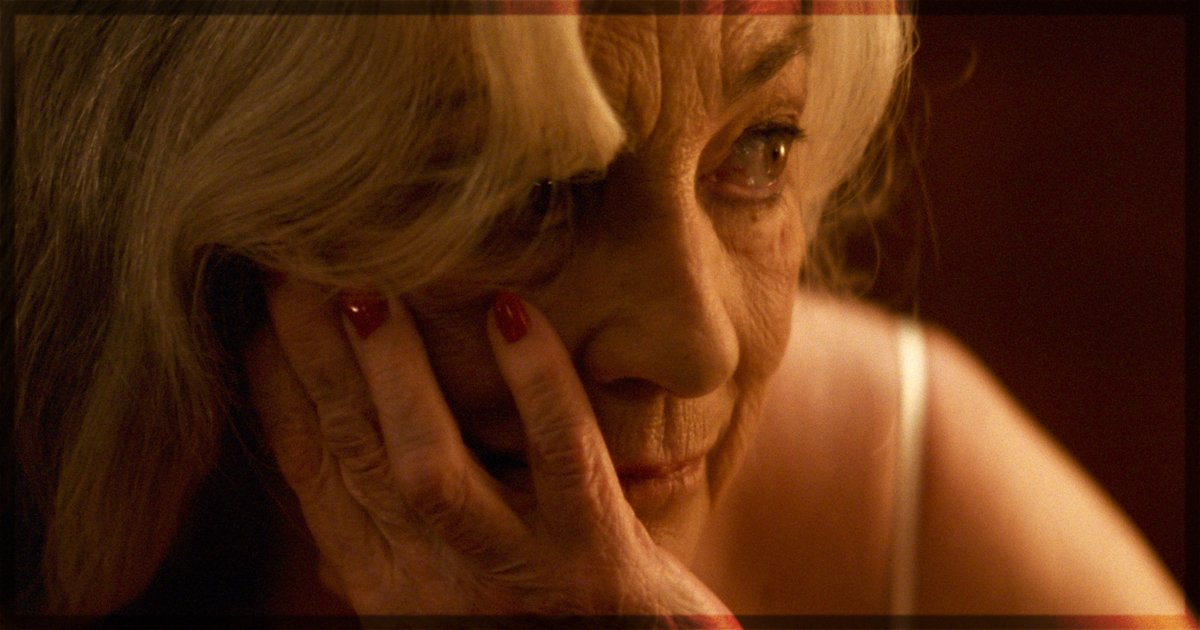
Ms. Maura’s enormous performance, which includes more nudity than you would expect from someone in her late seventies, is more than enough reason to see the film. Maria Angeles has had exactly the life she has wanted, even in her long widowhood, and what seemed like a lack of capability at the start is the cover of a core of iron. The script never makes the mistake of explaining why Clara feels so distant from her mother, why she is so uncomfortable in Marrakech or how their relationship got to be so strained. But unfortunately all this intelligence loses its nerve by the end, which fizzles out so badly it ends in a slump. It’s a big shame, because the defiance and the joy for life at the core of Calle Málaga is rare and ought to be celebrated wholly. This would have been a great movie with a better ending. As it is, Ms. Maura’s performance is its incredible saving grace, and its life-affirming joy is the main reason to see Calle Málaga.
Calle Málaga recently played at the Venice International Film Festival.
Learn more about the film at the Venice site for the title.
You might also like…